"Hurricane season" covers June 1 through November 30, which is half the calendar. That framing scares off a lot of people who would have had a perfectly good week, and it lulls a few others into ignoring a real risk. Here's how we actually think about it, as people who own two places here and watch the forecast for a living.
What the weather usually does
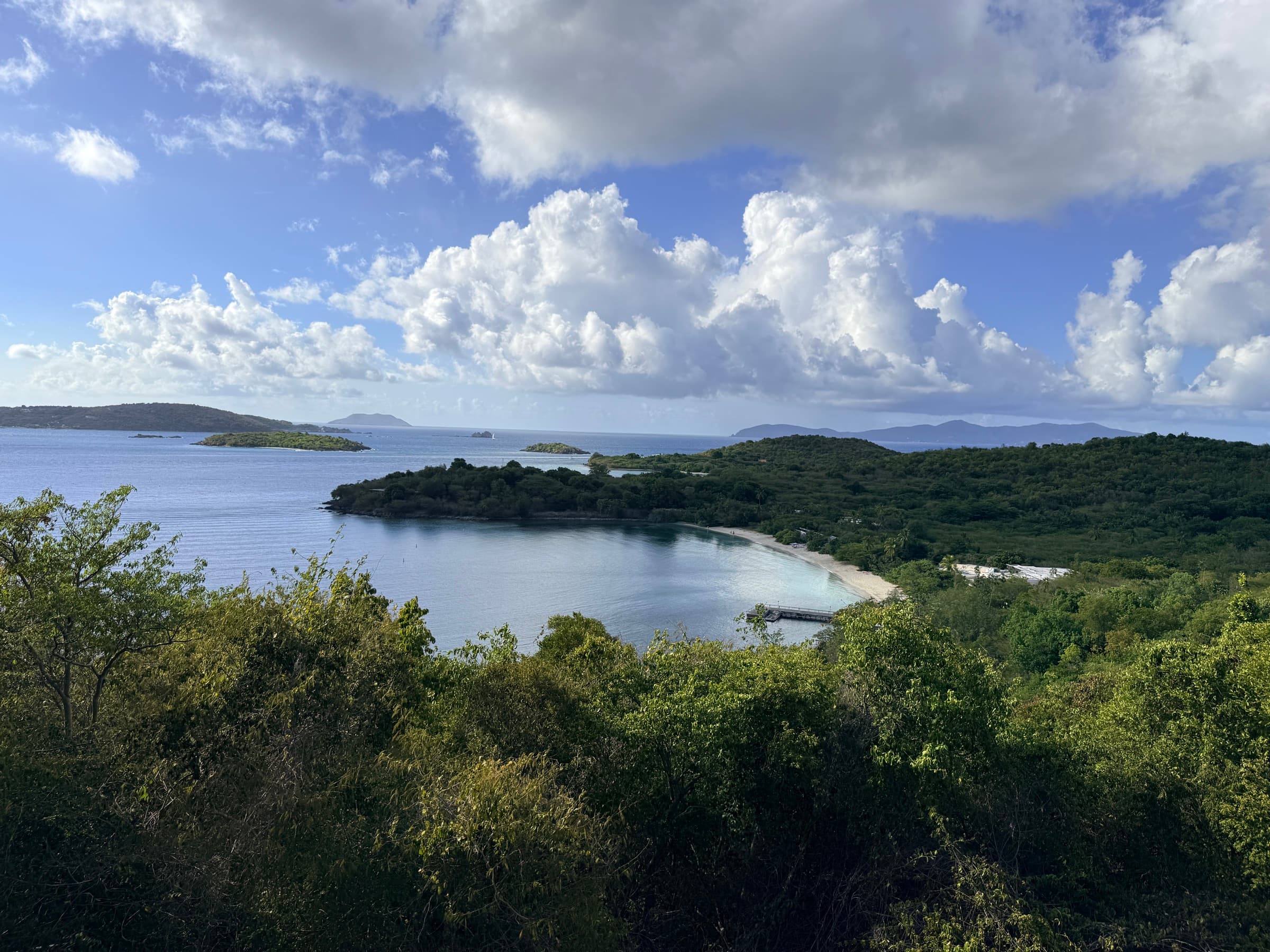
Most late-summer days on St. Thomas look like the photo above: hot, bright, and stacked with big cumulus that pile up over the water and the green hills through the afternoon. Rain here tends to arrive as a fast, heavy shower that soaks everything for fifteen minutes and then quits. It is not the all-day grey drizzle people picture. The water is at its warmest, the sea is often glassy on the east end, and the island is noticeably emptier.
The honest tradeoff is humidity and the occasional stretch of unsettled weather when a tropical wave rolls through. Those waves are common and mostly uneventful — wind, rain, a lost beach afternoon.
The part you should actually plan around
Named storms are the real variable, and they cluster: mid-August through early October is the busy stretch. The practical answer isn't to avoid the season, it's to plan for it.
Buy travel insurance, and buy the kind that covers weather cancellations rather than assuming your credit card does. Book flights you can change. Watch the forecast starting about a week out — tropical systems telegraph themselves, and you'll almost never be surprised the day before. And know that if a storm genuinely threatens, everyone here would rather you move your trip than ride it out.
Why people come anyway
Rates. Late summer and fall are when the island is cheapest, quietest, and warmest, and the difference is not small. Restaurants that need a reservation three weeks out in March will seat you the same night. Our current open dates and discounts are always worth a look in this window.
If you want the quiet-season case made in more detail, our St. Thomas in June post covers the front end of the same idea.
Where you base yourself matters a little more in late summer than it does in winter. The east end is the sheltered, dry side of the island, and our Sapphire Beach condo sits right on the sand there — afternoon showers tend to blow through in ten minutes and the morning water is usually glass. Up above Mahogany Run on the north side, Mahogany Seaview sits higher and catches more of the breeze off the Atlantic, which in August reads less as weather and more as mercy. It also has the better seat for the cloud show. Neither side is meaningfully rainier than the other over a week — they just feel different.