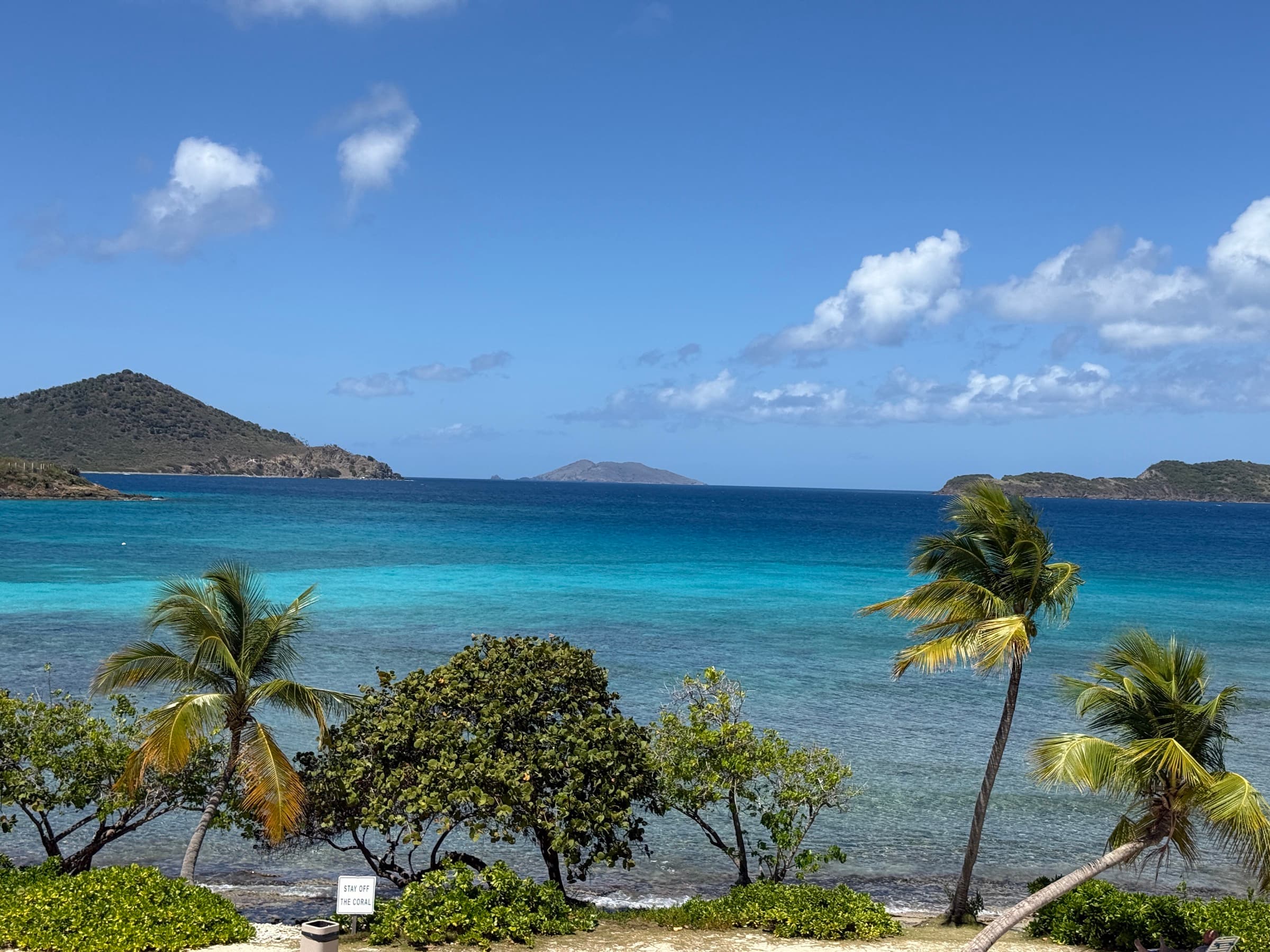
Most people book a boat to go snorkeling on St. Thomas. That's a fine day out, but it means paying for a captain to take you somewhere you can reach by walking into the water at Sapphire Beach. We stay here, and the honest truth is that a decent share of our best fish sightings have come from twenty minutes of floating around before breakfast.
Where the reef actually is
Sapphire's swimming area is a sandy shelf, and sand is boring. The living stuff sits at the edges — the rocky point on the north end of the beach, and the shallow reef flat that runs out toward the cays you can see on the horizon. Swim out from the middle of the beach and you'll spend a lot of energy looking at nothing. Hug the rocks instead and the whole thing changes within about thirty feet of shore.
It's shallow. That's the appeal and the catch: you get bright, clear, sunlit water without needing to be a strong swimmer, but you're also close enough to the coral to do damage without meaning to.
Stay off the coral — they mean it
There's a small sign posted where the path meets the sand that says exactly that, and it isn't decorative. The reef flat comes up close enough to the surface that standing on it is genuinely easy to do by accident, especially when a wave pushes you or you stop to adjust a mask. Coral takes decades to grow and a single sneaker-sized footprint to break.
The fix is simple. Put your fins on in the water, not on the reef. If you need to rest, swim back toward the sand rather than putting your feet down where you are. And if the water's cloudy enough that you can't see the bottom clearly, that's the day to skip it rather than feel your way around.
What you'll see
Nothing you'd film a documentary about, and that's fine. Expect parrotfish working the rocks, sergeant majors in the shallows, the occasional squadron of blue tangs moving through, and — on a good morning — a sea turtle grazing the grass beds. Rays show up in the sandy stretches if you're patient and quiet. We've never once gone out and seen nothing.
Timing is most of it
Morning, before the wind picks up. That's the entire trick. Sapphire faces east, so it catches the trade winds, and by early afternoon a light chop usually rolls in that stirs up sediment and cuts visibility. The water is at its clearest in the first few hours after sunrise, which conveniently is also when the beach is empty.
The flip side of the east-facing thing: on a windy stretch, especially in winter, Sapphire can be genuinely choppy for a few days running. That's not a bad beach, it's just a bad snorkel day. When that happens we drive fifteen minutes to the calmer, protected sand at Lindquist Beach or head to the north side.
Gear, and not renting it
Rental masks at beach shacks are a coin flip — the seals go stiff and a leaky mask ruins the whole thing. If you snorkel more than once a trip, bring your own or borrow decent gear. The Sapphire Beach villa keeps snorkel gear, beach chairs and coolers on hand for exactly this reason, so guests can walk down, swim, and come back up without a single transaction in between. Direct beach access sounds like marketing until you realize it's the difference between snorkeling twice a day and snorkeling once a trip.
There's no entrance fee at Sapphire, there are restrooms and a beach bar for after, and rentals if you want a paddleboard instead. It is, for our money, the most underrated water on the east end.
If you're weighing which side of the island to base yourself on, we wrote up the east end in more detail. And when the calendar has gaps, both our places run discounted weeks on the deals page.
Go early. Look at the rocks, not the sand. Don't stand up.